
Liver Disease
Liver Disease: Symptoms, Causes, Diagnosis
& Treatment in Islamabad
Liver disease often develops silently for years. Here’s how to recognize the early signs, understand your risk, and get the right care before significant damage occurs.
Your liver is one of the hardest-working organs in your body — filtering your blood, processing nutrients, and clearing out toxins around the clock. Most people never think about their liver until something goes wrong, and that’s part of the problem. Liver disease often develops silently over years, with few or no symptoms until significant damage has already occurred.
At KM Clinics Islamabad, we regularly see patients whose liver concerns are picked up almost by accident — during a routine liver function test in Islamabad ordered for something else entirely. This guide explains what liver disease is, how to recognize it early, and what liver disease treatment in Islamabad actually involves, so you know when it’s time to get checked.

What Is Liver Disease?
“Liver disease” isn’t a single condition — it’s a broad category covering any disorder that damages the liver and interferes with its normal functions. Some forms are mild and reversible if caught early; others progress into long-term, chronic conditions that need lifelong management.
Liver damage generally develops in stages:
- Hepatitis — inflammation of liver tissue, usually the body’s response to injury, infection, or toxins
- Fibrosis — ongoing inflammation causes scar tissue to begin replacing healthy liver cells
- Cirrhosis — extensive, often permanent scarring that seriously impairs liver function
- End-Stage Liver Disease (Liver Failure) — the liver can no longer meet the body’s needs, often requiring transplantation
Not everyone with liver disease progresses through every stage — and this is exactly why early liver disease diagnosis in Islamabad matters. The earlier the condition is caught, the more treatable and even reversible it tends to be.
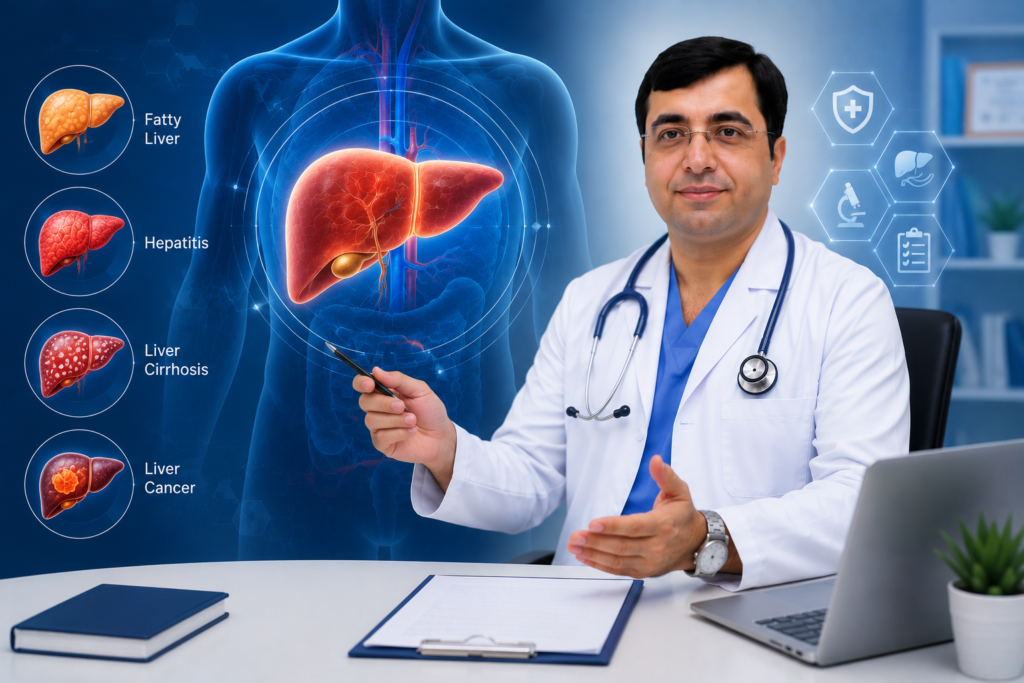
Common Types of Liver Disease
Several distinct conditions fall under the liver disease umbrella, including:
- Non-Alcoholic Fatty Liver Disease (NAFLD / MASLD) — now increasingly referred to as Metabolic Dysfunction-Associated Steatotic Liver Disease; one of the most common liver conditions today, closely tied to obesity and metabolic syndrome
- Alcohol-Related Liver Disease — caused by long-term heavy alcohol use
- Viral Hepatitis — including Hepatitis A, Hepatitis B, and Hepatitis C
- Autoimmune Liver Conditions — where the immune system mistakenly attacks liver tissue
- Cirrhosis — advanced scarring resulting from long-standing liver damage of any cause
- Liver Cancer — which can develop after years of chronic liver disease
Early Symptoms of Liver Disease
One of the most important things to understand about liver disease is that early stages often produce no noticeable symptoms at all. This is why routine screening matters even when you feel fine. As liver damage progresses, symptoms may include:
- Persistent fatigue
- Nausea or reduced appetite
- Mild digestive discomfort, particularly with fatty foods
- Unexplained weight loss
- Dry, itchy skin without a visible rash
In more advanced cases, more visible signs can appear:
- Jaundice — yellowing of the skin or the whites of the eyes
- Dark-colored urine
- Unusually pale stool
- Swelling in the abdomen or legs
- Musty-smelling breath
- Mild confusion or difficulty concentrating
If you notice any combination of these symptoms — especially jaundice, ongoing fatigue, or abdominal swelling — it’s important to schedule a liver health checkup in Islamabad promptly rather than waiting for symptoms to escalate.
What Causes Liver Disease?
Liver disease can stem from a wide range of causes, including:
- Fat accumulation in the liver (fatty liver / MASLD), often linked to obesity, insulin resistance, and Type 2 diabetes
- Heavy or long-term alcohol use, leading to alcohol-related liver disease
- Viral infections — Hepatitis A, B, and C
- Autoimmune disorders, where the immune system attacks liver cells or bile ducts
- Inherited metabolic disorders, such as glycogen storage disease or Wilson disease
- Toxic hepatitis, caused by certain medications, supplements, or chemical exposure
- Bile duct conditions, which affect how bile flows from the liver
Because the underlying cause shapes the entire treatment approach, an accurate diagnosis is essential — not just identifying that the liver is damaged, but understanding exactly why.
You May Be at Higher Risk If You
- Have obesity or Type 2 diabetes
- Regularly consume alcohol, especially in large amounts
- Have a personal history of hepatitis
- Take certain medications on a long-term basis
- Have a family history of liver disease
- Have elevated cholesterol or other metabolic risk factors
What This Means For You
- If several of these apply to you, proactive testing through a liver care clinic in Islamabad is a sensible step, even without symptoms
- Early screening catches problems while they are still reversible
- A single liver function test is often the first clue
Because diabetes and heart disease are so closely intertwined, and high blood pressure remains one of the single biggest contributors to cardiovascular risk, managing these conditions together is central to effective prevention.
How Is Liver Disease Diagnosed
Diagnosing liver disease typically involves a combination of history-taking, physical examination, and targeted testing:
01
Liver Function Test (LFT)
measures key markers including ALT and AST (liver enzymes) and bilirubin levels
02
Elevated Liver Enzymes
often the first clue that prompts further investigation
03
Liver Ultrasound
a non-invasive imaging test to assess liver structure and detect fatty changes, cysts, or scarring
04
Advanced Imaging
CT scan, MRI, or elastography for more detailed evaluation of liver stiffness and fibrosis
05
Liver Biopsy
occasionally required to confirm the extent of inflammation or scarring in more complex cases
At KM Clinics, diagnosis isn’t limited to a single lab report. Dr. Ausaf Ul Mir reviews liver function results alongside your broader metabolic health — including weight, blood sugar, and cholesterol — to build a complete picture of what’s driving the liver changes.
Treatment Options for Liver Disease
Treatment depends entirely on the specific type and stage of liver disease, but generally falls into a few categories:
Lifestyle-Based Treatment
for earlier-stage fatty liver disease, sustained changes to diet, physical activity, and weight are often enough to halt or even reverse damage
Medication Management
used to treat specific causes (such as antiviral therapy for hepatitis) or to manage symptoms and complications
Alcohol Cessation Support
essential for alcohol-related liver disease, often the single most impactful step a patient can take
Monitoring for Complications
including regular checks for fluid retention (ascites), changes in mental clarity, or signs of advancing cirrhosis
Referral for Advanced Care
in cases of significant cirrhosis or liver failure, coordination with specialized liver centers or transplant evaluation may be necessary
The encouraging reality is that many forms of liver disease — particularly fatty liver disease caught in its earlier stages — respond well to consistent lifestyle changes and are genuinely reversible.
Lifestyle Changes to Protect Your Liver
Whether you’re managing an existing liver condition or simply want to reduce your risk, these habits make a measurable difference:
- Maintain a healthy weight through balanced, whole-food nutrition
- Limit or eliminate alcohol consumption
- Stay physically active on a regular basis
- Avoid unnecessary long-term use of medications known to stress the liver
- Get vaccinated against Hepatitis A and B if you haven't already
- Schedule a liver function test in Islamabad periodically, especially if you have risk factors
Early detection of liver disease remains the single most reliable way to protect long-term liver health.
Why Choose KM Clinics for Liver Disease Care?
At KM Clinics Islamabad, liver disease care is built around evidence-based diagnosis and personalized treatment planning, not generic advice. Dr. Ausaf Ul Mir, an Internal Medicine Specialist, provides comprehensive evaluation, early detection, and long-term management for fatty liver disease, hepatitis, cirrhosis, and other chronic liver disorders.
When you choose KM Clinics for liver care, you can expect:
- A thorough evaluation that connects liver health to related metabolic conditions like diabetes, obesity, and cholesterol
- Access to executive diagnostic physicals for a complete health assessment beyond just the liver
- Precision diagnosis aimed at identifying the true underlying cause, not just treating lab numbers
- Personalized liver disease treatment tailored to your specific stage, lifestyle, and risk factors
- Continuity of care from a single physician who understands your full medical history
Conveniently located near Zaraj Housing Society and close to Giga Mall Islamabad, KM Clinics is a trusted medical clinic in Islamabad for patients seeking comprehensive, preventive-focused internal medicine care.

About Dr. Ausaf Ul Mir
Founder, KM Clinics · Internal Medicine Specialist
Recognized for his evidence-based, root-cause approach to chronic disease management, with expertise spanning internal medicine, liver disease management (including fatty liver and hepatitis), diabetes care, hypertension management, preventive health, and executive diagnostic physicals. Rather than treating isolated lab results, Dr. Ausaf focuses on understanding the full metabolic picture behind liver disease.
Frequently Asked
Questions
Some forms of liver disease, particularly early-stage fatty liver disease, can be reversed with lifestyle changes and appropriate treatment. Others, especially once cirrhosis develops, become long-term conditions that require ongoing management rather than a cure.
Early liver disease often has no symptoms at all. When early signs do appear, they tend to be subtle — fatigue, mild digestive discomfort, or slightly reduced appetite — which is why routine liver function testing is so valuable.
Yes, in many cases. Fatty liver disease diagnosed early often improves significantly with sustained weight loss, dietary changes, and increased physical activity.
Fatty liver disease involves fat accumulation in liver cells, often linked to metabolic factors. Hepatitis refers to inflammation of the liver, which can be caused by viral infections, alcohol, autoimmune conditions, or fatty liver disease itself.
If you have risk factors such as obesity, diabetes, regular alcohol use, or a family history of liver disease, an annual liver function test is generally recommended. Your physician can advise on the right frequency for your situation.
No. While alcohol-related liver disease is common, many cases — particularly fatty liver disease and viral hepatitis — occur in people who drink little or no alcohol at all.
You should seek evaluation if you notice jaundice, ongoing fatigue, unexplained weight loss, abdominal swelling, or if routine blood work shows elevated liver enzymes.
Concerned About Your Liver Health or Abnormal Liver Function Tests?
Book a consultation with Dr. Ausaf Ul Mir at KM Clinics Islamabad for a comprehensive liver health evaluation and personalized treatment plan.